In this guide
TL;DRThe short version
- Dubai summer heat keeps air conditioners running hard, and DEWA bills rise with them. According to Dubai Electricity and Water Authority (DEWA) guidance, a few changes to how you run the unit can cut use without giving up a cool home.
Dubai summer heat keeps air conditioners running hard, and DEWA bills rise with them. According to Dubai Electricity and Water Authority (DEWA) guidance, a few changes to how you run the unit can cut use without giving up a cool home.
Dubai summer heat keeps air conditioners running hard, and DEWA bills rise with them. According to Dubai Electricity and Water Authority (DEWA) guidance, a few changes to how you run the unit can cut use without giving up a cool home.
Set the thermostat right
The single biggest lever is the thermostat. According to DEWA, keep your thermostat set at 24°C, or higher. Cool enough for comfort, that setting avoids the extra draw of pushing the unit to 20°C or 21°C. Setting a lower temperature does not cool a home faster. It only makes the compressor work harder and run longer for the same result.
DEWA also notes that raising the set point by each degree can meaningfully reduce AC consumption. When you can tolerate a slightly warmer room, that one-degree lift is one of the highest-impact free savings available in a Dubai summer.
Leave it running higher when you go out
Switching the unit off entirely when you leave feels like the obvious save, but Dubai heat refills a home fast. When the system comes back on, it has to work much harder to bring the temperature down than it would to maintain it. DEWA's guidance is to leave the unit running higher while you are out — around 24°C to 26°C — rather than powering it down completely.
For rooms or areas that stay empty for longer stretches, DEWA has long advised setting unoccupied areas higher so cooling load follows how the home is actually used.
Keep the unit efficient
Maintenance matters as much as settings. A dusty filter forces the unit to work harder to push air through, raising energy use for the same cooling. Cleaning or replacing filters regularly is one of the simplest efficiency habits, and it costs far less than a higher bill.
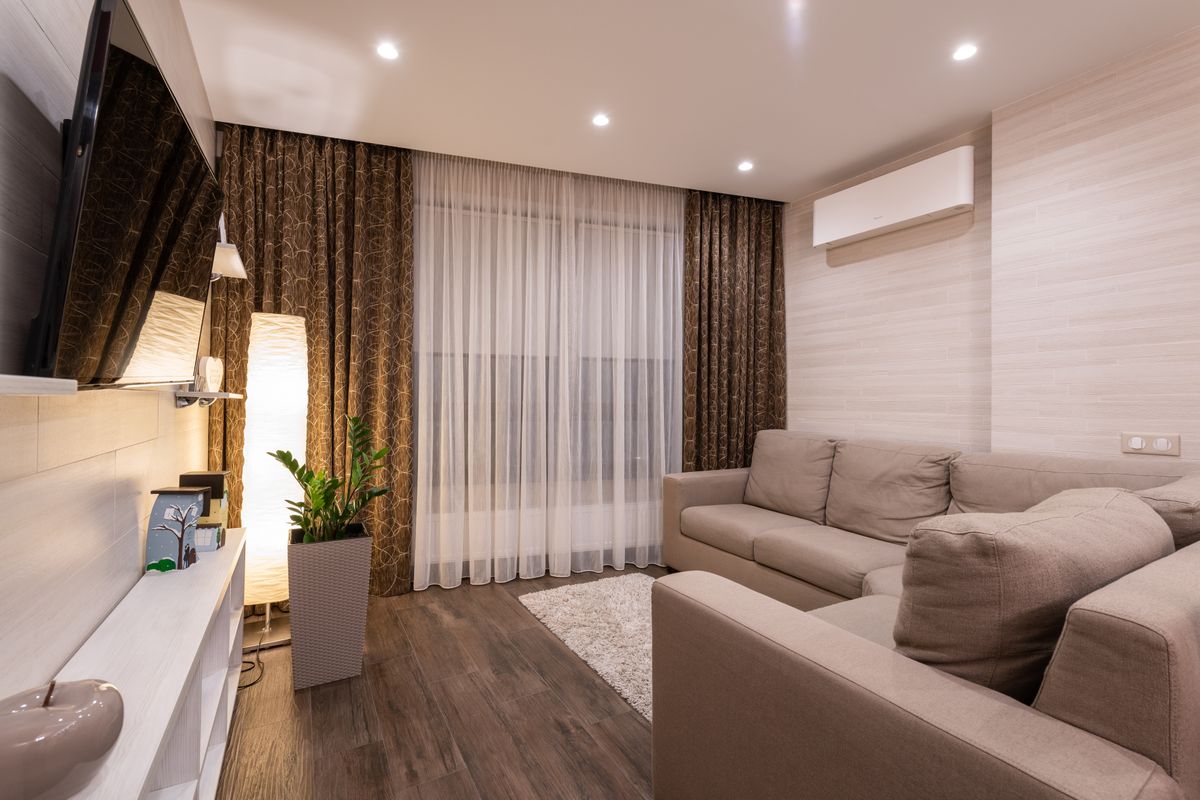
Blocking heat before it gets inside also cuts how much the AC has to do. Curtains, drapes, shades, awnings, and reflective window film all reduce direct sunlight heating a room, so the unit runs less to hold the same temperature. Sealing gaps around doors and windows so cool air does not leak out is the same idea from the other side of the envelope.
Time cooling and share the load
Running the AC hardest during the midday and afternoon peak costs more than spreading the same cooling load across the day. Where your schedule allows, pre-cool earlier in the morning and let the thermostat hold steady through the hottest hours instead of overriding the setting all day.
Ceiling and standing fans help too, though they cool people rather than rooms. Running a fan with the AC lets you raise the thermostat a degree or two without losing comfort, since moving air makes a room feel cooler at a higher temperature than still air does. Combined with DEWA's degree-by-degree guidance, that small thermostat lift is real bill impact over a long summer.
Make the settings stick
Start with the rooms you actually use. Keep doors closed between cooled and uncooled areas, and avoid leaving windows open while the AC is running. Set the thermostat once, then give the room time to settle before making another change. If a room still feels warm, check whether sunlight, a blocked vent, or a dirty filter is working against the setting before turning the temperature down.
A simple routine is easier to keep than a long list of one-off fixes: check the filter, draw the curtains before the afternoon sun, raise the setting in empty rooms, and use a fan where people are sitting. These habits reduce the work the system has to do while keeping the rooms you occupy comfortable.
Practical takeaway
None of these changes need new equipment or a large upfront cost. A thermostat at 24°C or higher as DEWA recommends, a clean filter, a fan sharing the work, blocked midday sun, and higher set points in unused rooms are small habits that add up over a Dubai summer. Following published DEWA energy-saving tips beats guessing at settings when the heat peaks.
💬 What's your go-to trick for keeping your DEWA bill down in summer?